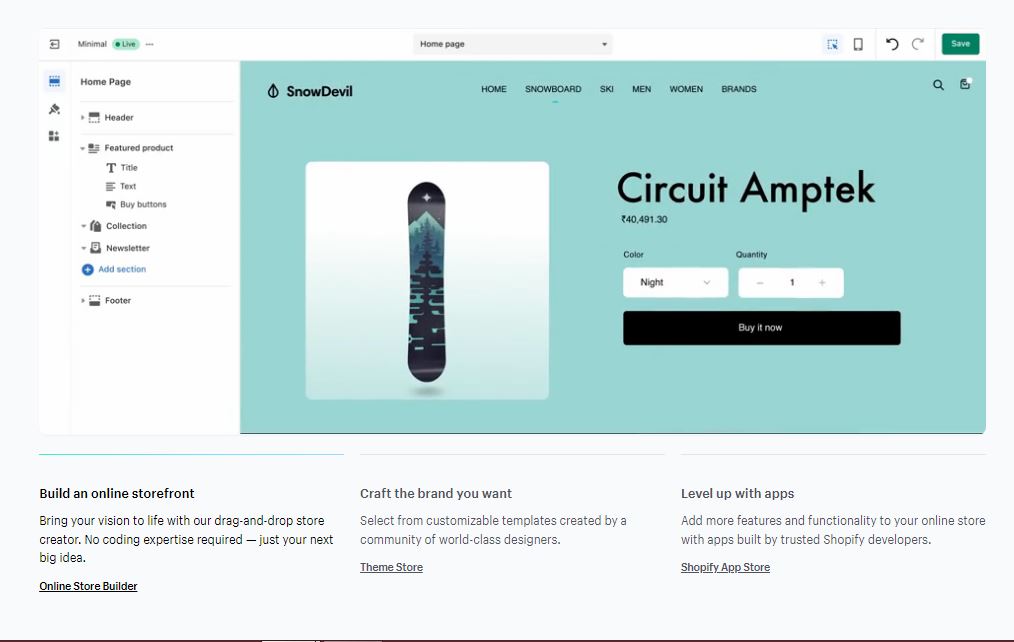
It makes launching an e-commerce site easily accessible to small businesses and the non-technical, but Shopify Plus, it's enterprise version, provides the tools and scale that a large retailer is looking for, for a fraction of the cost of other enterprise products. It eliminates the need to host your own servers, there is no need for lengthy and expensive development and programming projects, and it has out-of-the-box features that many other platforms don't, such as SSL, CDN for images and files, built-in CMS, vetted and supported app store, multi-location inventory management, free POS, built-in payment options and integrations, and easy-to-use integrations with Facebook, Pinterest, Google Shopping, Instagram, etc.
To-date, Shopify has proven to be one of the most flexible and feature-rich tools that we've used. Here's an example: Our company - Apotheca worked with on multi-million dollar implementations of IBM Websphere and Magento, that didn't have nearly the features that a new, $30/month Shopify site has. Want product reviews? That can cost thousands of dollars to implement on Websphere using a third party vendor (Shopify offers a free app with the same features), which can cost as much as $1K to $2K per month. Want blogging features? Yeah, that'll cost you too, but is free on Shopify. How about integrated inventory management? Sure, other platforms can do that, but not without investing in tens of thousands of dollars in programming and systems integrations. The investment and barrier to entry for small to medium-sized businesses are much smaller, particularly when compared to platforms like Magento, where you're essentially forced to engage a developer to develop and launch a site.
Shopify has a diverse and well-supported app store that helps to affordably expand and enhance its capabilities.
As with any e-commerce platform, there are definitely some drawbacks. One example just happened this weekend, when the entire Shopify platform went down because of Google's Cloud outage. Since it's a hosted, proprietary platform, you don't have the flexibility to host your own site on servers of your choosing. This is typically a perk for many retailers, however, since they also don't have to purchase or manage servers, combat security issues, or worry about scale as traffic spikes or increases.
Another drawback is that Shopify (separate from Shopify Plus), while giving you some flexibility to customize your site using its proprietary markup (Liquid), doesn't give you access to the shopping cart code, and you don't have access to things like sitemaps, robots.txt, and other common files that allow you to tweak your SEO and site performance.