Key takeaways
- Python remains one of the most trusted programming languages for web development, AI, automation, data science, and enterprise software.
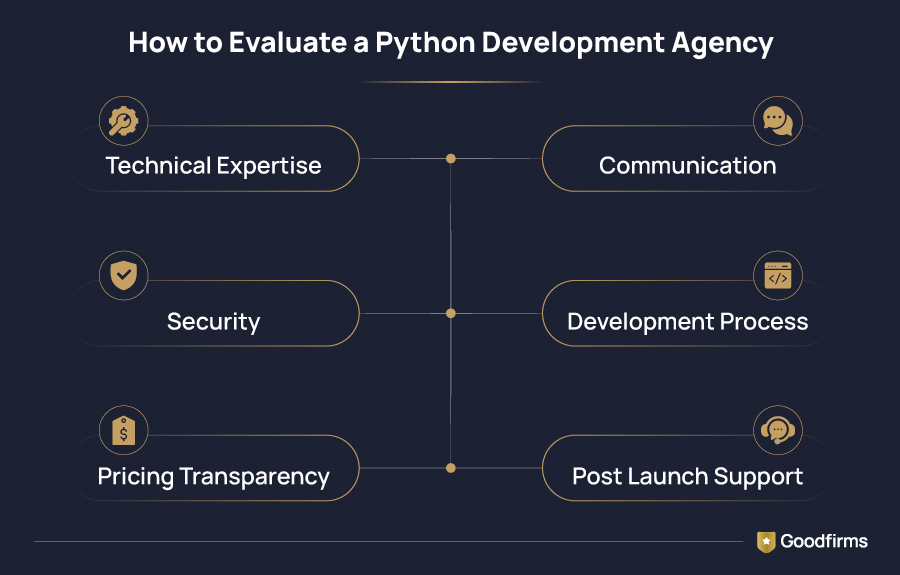
- Choosing the right Python development agency requires evaluating technical expertise, communication, security practices, pricing transparency, and post-launch support.
- Reviewing portfolios, client references, and similar projects provides valuable insight into an agency's ability to deliver successful outcomes.
- Clear contracts, realistic timelines, and well-defined development processes reduce project risks and improve collaboration.
- Investing time in the vendor selection process helps businesses avoid costly mistakes and build software that supports long-term growth.
Hiring a Python development company is a major investment, and the right partner can make all the difference. A skilled agency can help you launch faster, build scalable software, and avoid costly development mistakes. The wrong one can leave you with missed deadlines, budget overruns, and an application that falls short of your expectations.
Before you make a decision, look beyond portfolios and pricing. Evaluate the agency's technical expertise, development process, communication, security practices, and ability to support your product after launch. This guide covers the ten essential questions to ask a Python development agency before you hire them, helping you choose a partner that aligns with your business goals and delivers long-term value.
Choosing the right development partner can significantly influence your project's success. Browse leading Python development companies, compare verified reviews, portfolios, pricing, and expertise, and confidently shortlist agencies that match your requirements.
Why Hire a Python Development Agency Instead of Building Everything In-House?
Building an internal Python team requires hiring experienced developers, onboarding them, purchasing development tools, and continuously investing in training. For many businesses, outsourcing offers a faster and more cost-effective path.
Here are some of the biggest advantages of hiring a Python development company.
Access to Experienced Python Specialists
Established agencies deliver custom Python development solutions across multiple industries and project types. They understand modern frameworks, coding standards, software architecture, and performance optimization, allowing them to deliver robust applications more efficiently.
Faster Time to Market
Hiring an experienced agency eliminates lengthy recruitment cycles. Development can begin almost immediately, helping businesses launch products faster and respond quickly to market opportunities.
Lower Development Costs
Outsourcing often reduces overall development costs because businesses avoid expenses related to recruitment, employee benefits, infrastructure, software licenses, and ongoing training. Instead, they pay only for the resources required during the project.
Access to Modern Technologies
Leading Python development agencies continuously adopt emerging technologies such as FastAPI, LangChain, AI frameworks, cloud-native architectures, containerization, and DevOps practices. Python is the go-to programming language for AI and ML projects. This ensures clients benefit from current development standards without investing heavily in internal upskilling.
Better Scalability
Project requirements often change after development begins. Agencies can quickly add developers, QA engineers, UI designers, DevOps specialists, or AI engineers whenever additional expertise is needed.
Reduced Project Risks
Experienced agencies follow structured development methodologies, perform regular testing, maintain documentation, and proactively identify risks before they impact project timelines.
10 Questions to Ask Before Hiring a Python Development Agency
Use the following questions as a checklist when evaluating agencies that offer Python development services. Their answers can help you separate experienced technology partners from agencies that simply market Python development services.
1. What experience does your team have with Python development?
Ask the Python development agency how long they have been involved in Python application development and which frameworks they regularly use. For example, an agency specializing in Django may be an excellent fit for enterprise web applications, while one experienced with FastAPI may be better suited for API-first platforms. If your project involves artificial intelligence, consider evaluating agencies alongside leading AI development companies with expertise in TensorFlow, PyTorch, LangChain, and AI agents.
2. Can you share similar Python projects you have successfully delivered?
Instead of asking only for a portfolio, request projects similar in complexity, industry, or technology stack. Case studies help you understand how the agency approached business problems, selected technologies, managed timelines, and delivered measurable outcomes.
The right way to find out whether they can understand your requirement is to ask whether they have similar projects in your industry for you to compare.
3. What development methodology and project management process do you follow?
Understanding a software development agency gives you confidence that the project will stay on schedule and within budget.
Most modern Python agencies follow Agile methodologies with short development sprints, regular demonstrations, continuous testing, and ongoing client feedback.
You should also clarify who will be your primary point of contact throughout the project and how frequently progress meetings will be conducted.
It is easier to work with and significantly reduces the chances of project delays when agencies have a transparent development process.
4. What is your software testing and quality assurance process?
Ask whether testing is integrated throughout the development lifecycle or performed only at the end. Agencies that follow Continuous Integration and Continuous Delivery (CI/CD) generally identify issues earlier, reducing costly fixes later.
If your application handles sensitive customer data or financial transactions, ask how they test for vulnerabilities such as SQL injection, API security, authentication flaws, and access control issues, and whether they follow recommendations commonly adopted by leading cybersecurity companies.
Try to understand how they document bugs, prioritize fixes, and verify issues before every release, especially if they leverage dedicated testing services to support quality assurance efforts.
5. How do you ensure security, compliance, and data protection?
Ask the agency about their secure development practices from the very beginning of the project.
If your business operates in regulated industries such as healthcare, banking, or eCommerce, ask whether they have experience building software that complies with standards like GDPR, HIPAA, PCI DSS, or SOC 2.
6. Who will manage my project, and how will we communicate?
Clarify who will be responsible for managing your project. Depending on the agency's structure, your primary contact could be a project manager, delivery manager, technical lead, or product owner.
Many agencies now use collaborative tools such as Jira, Slack, Microsoft Teams, GitHub, ClickUp, and Azure DevOps to improve transparency. Weekly sprint reviews and milestone demonstrations also help clients stay informed throughout development.
If you are outsourcing to an offshore Python development company, discuss time zone overlap and expected response times before signing the agreement.
7. What is your pricing model, and are there any hidden costs?
Budget is one of the biggest factors when selecting a Python development company. However, comparing hourly rates alone rarely gives you the complete picture.
Ask the agency to explain exactly how they charge for their services.
Common pricing models include:
- Fixed-price projects
- Time and material
- Dedicated development teams
- Monthly retainers
Each model suits different project types, so choose one that aligns with your requirements. Also, request a detailed cost breakdown before signing any agreement.
Before finalizing your budget, it also helps to understand the factors that influence Python development costs, including project complexity, hiring model, technology stack, and development location.
8. Can you provide client references, reviews, or case studies?
Request references from businesses that have completed projects similar to yours. Speaking directly with past clients can reveal valuable insights about communication, technical expertise, project management, and long-term support.
While reviewing case studies, don't focus only on visual design. Pay attention to measurable business outcomes such as increased revenue, improved efficiency, reduced operational costs, or faster customer onboarding.
An agency with a strong portfolio should be comfortable sharing evidence of successful projects and satisfied clients.
9. What post-launch support and maintenance do you provide?
Launching a Python application is only the beginning. Regular updates, security patches, performance monitoring, and feature enhancements are essential to keep your software reliable and competitive.
Before hiring a Python development agency, understand exactly what happens after the product goes live. Some agencies include a warranty period with bug fixes, while others offer ongoing maintenance through monthly support plans.
If your application is business-critical, discuss Service Level Agreements (SLAs), response times, and escalation procedures before signing the contract.
10. Do you have experience working with businesses like mine?
Some agencies primarily work with startups building MVPs, while others specialize in enterprise software, regulated industries, or AI-powered platforms. Understanding where their experience lies helps determine whether they can support your long-term goals.
Industry knowledge often shortens development time because the team already understands common workflows, compliance requirements, and customer expectations. Many organizations seek guidance from IT consulting companies when evaluating technology partners, compliance requirements, and long-term software strategies.
Additional Questions Worth Asking
Once you've covered the essential hiring questions, consider asking a few more that can reveal how well an agency plans, communicates, and adapts throughout the project.
- How involved will our internal team need to be during development?
- How do you estimate project timelines and milestones?
- What happens if deadlines are delayed?
- How do you manage scope changes?
- What tools do you use for documentation and collaboration?
- How do you ensure code quality throughout development?
- Will we own the complete source code and intellectual property?
- What makes your agency different from other Python development companies?
- How do you handle unexpected technical challenges?
- Can you support future scaling and product enhancements?
How to Choose the Right Python Development Agency
After interviewing multiple vendors, compare them using a structured evaluation process rather than making a decision based solely on pricing.
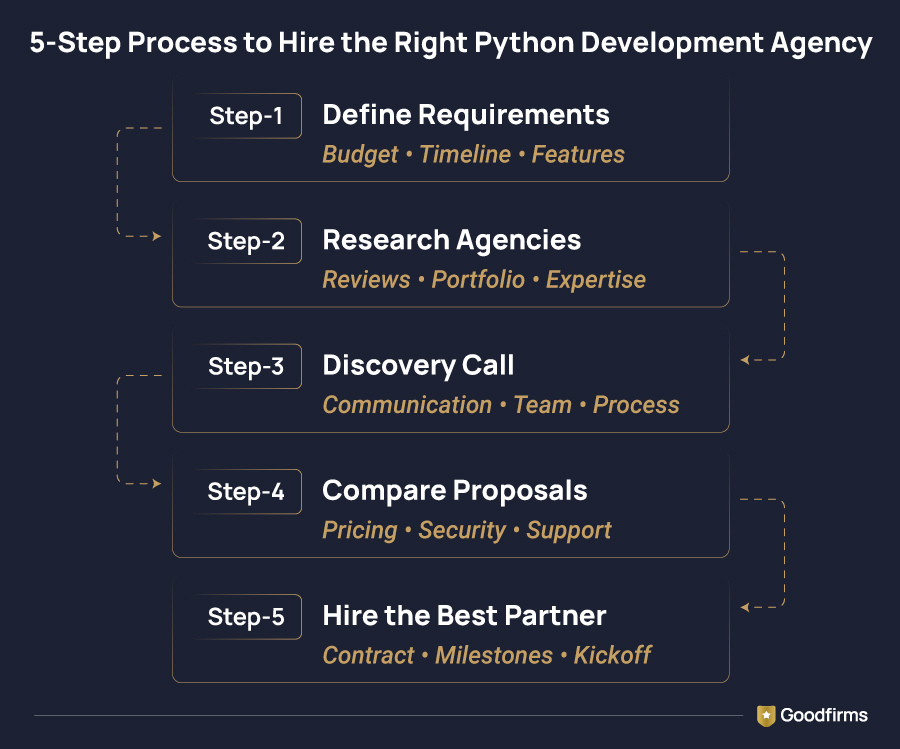
Step 1: Define your project requirements
Start by documenting your business objectives, project scope, estimated budget, preferred timeline, and requirements for custom Python development. The clearer your requirements, the easier it becomes to identify agencies that are genuinely qualified.
Step 2: Research and shortlist agencies
Review company portfolios, verified client reviews, industry expertise, technology stack, certifications, and years of experience. Goodfirms makes it easier to compare agencies based on verified customer feedback and service offerings.
Step 3: Schedule discovery calls
Meet with your shortlisted agencies and discuss your project in detail. Evaluate not only their technical knowledge but also how well they understand your business goals, ask relevant questions, and propose practical solutions. Pay attention to how transparent they are about timelines, risks, communication, and pricing.
Step 4: Compare proposals carefully
Rather than choosing the lowest quote, compare agencies based on:
- Technical expertise
- Relevant industry experience
- Communication process
- Security practices
- Development methodology
- Post-launch support
- Pricing transparency
- Scalability
Selecting the right development partner is a long-term investment, not simply a purchasing decision.
Step 5: Finalize contracts and project planning
Before development begins, ensure every important detail we discussed above is documented.
A well-defined contract protects both parties and minimizes misunderstandings throughout the engagement.
Ready to Find the Right Python Development Partner?
The success of any Python software development project depends as much on your development partner as it does on the technology itself. Asking the right questions early can help you identify agencies with the technical expertise, communication standards, and business understanding needed to deliver successful outcomes.
If you are evaluating multiple vendors, compare their experience, verified client reviews, portfolios, pricing models, and service offerings before making your final decision.
Explore Goodfirms' carefully curated list of top Python development companies to shortlist trusted technology partners for your next project.